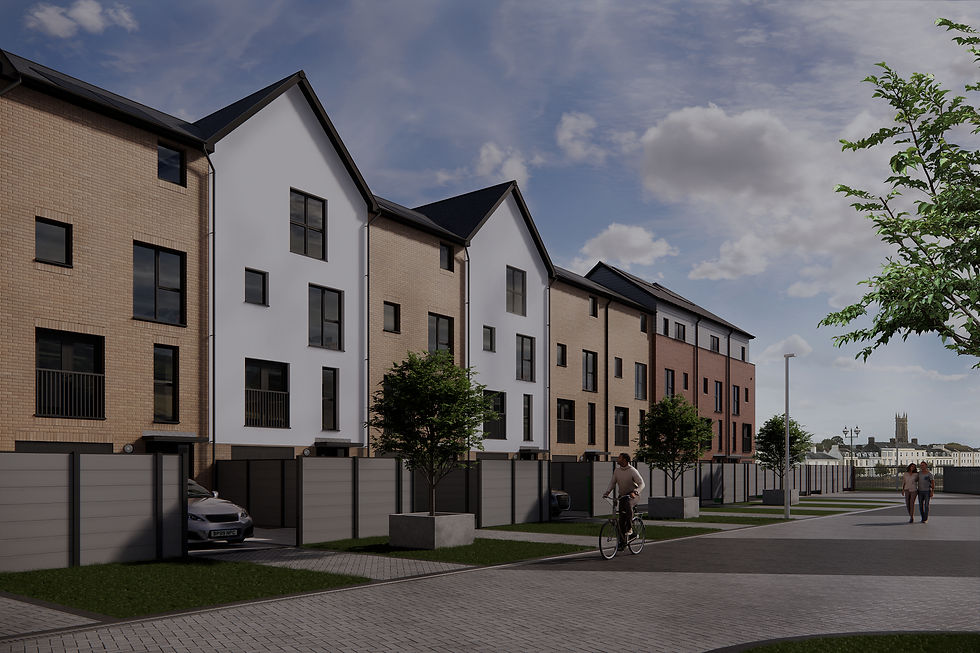
Future Homes and Buildings Standards: Everything There Is To Know!
The Future Homes Standard (FHS) was published on 24th March 2026 by the Ministry of Housing, Communities and Local Government (MHCLG).
It is the next revision to Part L of the Building Regulations (Conservation of Fuel & Power) in England. Part L outlines the legal requirements for energy efficiency in new and existing buildings. The FHS represents the most significant change to how homes are built in England since the introduction of Part L energy efficiency requirements in 1985, and it will significantly redefine what buyers of new-build homes can expect from their properties.
How Will This Impact New Homes and Buildings?
The FHS will have several impacts on new homes and non-domestic buildings, including:
-
They will be 'zero carbon ready' - this means they will naturally become zero carbon over time.
-
New homes will emit at least 75-80% less carbon than previous standards.
-
There will be an improvement in the thermal performance of the building fabric.
-
Solar panels are to be installed on the majority of new homes - this will reduce the reliance on fossil fuels and strengthen energy security.
-
They will be fitted with low carbon heating (for example, heat pumps) in order to effectively end the use of gas boilers. We dive deeper into this further into this article!
What Are the Reasons and Goals of the FHS?
Ultimately, the reason for the Future Homes Standard is to improve the energy efficiency of buildings and reduce carbon emissions. Some other goals of the FHS are to:
-
Help England avoid the more volatile price increases of fossil fuels
-
Drive down energy bills for households
-
Support the goal of reaching net zero carbon emissions by 2050
-
Ensure new homes and non-domestic buildings are future-proofed with low carbon heating and high levels of energy efficiency
The End of Gas Boilers in New Homes
This could be the most significant change as a result of the FHS. The new regulations are resulting in the end of gas boilers (and all fossil fuels in new homes). While they have technically not been 'prohibited', the 75-80% carbon reduction target makes it mathematically impossible to achieve compliance with a gas boiler. This means new homes will need to use a low carbon heating system; the most common example of this is an Air Source Heat Pump (ASHP).

Example of a Gas Boiler

Example of an ASHP
Implementation Date of New Regulations
For non-higher risk buildings, the new regulations will come into effect on 24/03/2027, followed by a 12 month transition period. For higher risk buildings, the implementation date will be 24/09/2027, recognising the greater length and complexity of the Building Control process.
The Changes Over Time to Carbon and Energy Performance Requirements - Part L 2013 vs Part L 2021 vs FHS
Part L 2013:
-
CO2 Reduction Target - Baseline (0%)
-
Heating System - Gas boiler permitted
-
Typical EPC Rating - C (69-80)
-
Estimated Annual Energy Cost (for 3-bed dwelling) - £1,100-1,400
Part L 2021 (current):
-
CO2 Reduction Target - 31% below 2013
-
Heating System - Gas boiler permitted
-
Typical EPC Rating - B (81-88)
-
Estimated Annual Energy Cost (for 3-bed dwelling) - £700-950
Future Homes Standard:
-
CO2 Reduction Target - 75-80% below 2013
-
Heating System - No fossil fuel heating; heat pump or equivalent required
-
Typical EPC Rating - A (92+)
-
Estimated Annual Energy Cost (for 3-bed dwelling) - £400-600
How Does the FHS Affect Buyers and Developers?
The Future Homes Standards is predominately about how new homes and buildings are built, but it affects buyers and developers in different ways.
For home buyers, the impact is fairly indirect but also mostly beneficial. Some of the effects on home buyers include:
-
Lower Running Costs - new homes built under the FHS are designed to use significantly less energy compared to older homes, resulting in lower energy bills over time.
-
Better Long-Term Value - new homes will already meet future regulations. This will therefore make it more attractive when reselling as there will be less need to make any changes later.
-
Improved Comfort & Quality - the FHS will result in new homes having better air quality and ventilation, as well as more stable indoor temperatures.
-
Likely to be Higher Upfront Prices - this is due to the homes being more 'advanced' and as such, build costs may also be higher, resulting in increased new-build prices. However, this often will be offset by lower bills.
For developers, the impact is direct and likely to be much more significant. Some of the effects on developers include:
-
Higher Construction Costs - developers need to use more advanced materials and systems under the FHS, as well as improving insulation and airtightness. Most importantly, they will need to shift from using gas boilers to low-carbon heating. All of these factors will increase build costs.
-
Compliance Pressure - much tighter regulations will need to be met.
-
Design & Supply Chain Changes - developers will need to rethink their building methods. Layouts will most likely need adjusting to make room for equipment (like heat pumps) and they will need new knowledge on factors such as low-carbon tech.
-
Potential Advantage in the Market - new homes may appeal more to environmentally conscious buyers due to their energy efficiency and 'future-proofing'.
Summary
The Future Homes Standard is a major turning point in the design and construction of new homes and buildings in England, and how they are experienced. Setting high expectations for carbon reduction and energy efficiency will accelerate the progress towards the goal of reaching net zero carbon emissions by 2050.
While developers will face increased costs, stricter regulations and the need to adapt to new construction methods, the changes will ultimately improve the overall quality of new housing. For buyers, even though the upfront purchase prices may be higher, the long-term benefits through the new regulations will offset this.
As the regulations come into force, they will set a new benchmark for housing in England, representing more consideration to long-term performance and sustainability.
Get In Touch

Contact Us
Woodward Smith Chartered Architects
6 Tuly Street
Barnstaple
Devon
United Kingdom
EX31 1DH

